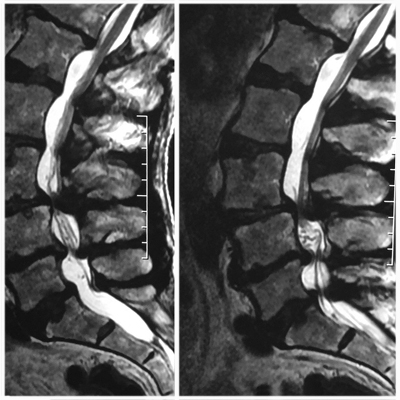
Slalom Technique as a treatment in multilevel lumbar spinal stenosis. Series of cases treated simultaneously with endoscopic and tubular decompression with microscopic assistance
Abstract
Introduction: Unilateral laminectomy for bilateral decompression (ULBD) by single approach has become relevant in patients with multilevel stenosis, when it is performed at more than one level with single approach, alternately and crosswise to the previous approach is known as a slalom technique.The objective of the following work is to present a series of cases treated with the slalom technique with bilateral endoscopic and microscopic assistance, simultaneous in patients with multilevel lumbar canal stenosis. Materials and Methods: Retrospective analysis of patients treated simultaneously between the months of January 2017 to January 2018, all operated by the same surgical team with tubular separators and simultaneous endoscopic and microscopic assistance. Results: Four patients, all male, with an average age of 73.5 years with multilevel lumbar pathology, were included. In total 10 segments were decompressed (2.5 average level for patients), with an average surgery of 107 minutes. No associated complications, with hospital discharge within the day of surgery. Conclusions: The minimally invasive Slalom technique turns out to be a very effective procedure to resolve symptoms of multilevel stenosis associated with a bilateral combined technique with two surgical teams, resulting in a viable option for the treatment of this type of patient. Level of Evidence: IVDownloads
References
Costa F, Sassi M, Cardia A, Ortolina A, De Santis A, Luccarell G, et al. Degenerative lumbar spinal stenosis:
analysis of results in a series of 374 patients treated with unilateral laminotomy for bilateral microdecompression. J Neurosurg Spine 2007;7(6):579-86. https://doi.org/10.3171/SPI-07/12/579
Deyo RA, Ciol MA, Cherkin DC, Loeser JD, Bigos SJ. Lumbar spinal fusion. A cohort study of complications,
reoperations, and resource use in the Medicare population. Spine (Phila Pa 1976) 1993;18(11):1463-70.
PMID: 8235817
Becker P, Bretschneider W, Tuschel A, Ogon M. Life quality after instrumented lumbar fusion in the
elderly. Spine (Phila 1976) 2010;35(15):1478-81. https://doi.org/10.1097/BRS.0b013e3181c62294
Fredman B, Arinzon Z, Zohar E, Shabat S, Jedeikin R, Fidelman ZG, et al. Observations on the safety and efficacy
of surgical decompression for lumbar spinal stenosis in geriatric patients. Eur Spine J 2002;11(6):571-4.
https://doi.org/10.1007/s00586-002-0409-7
Kilinçer C, Steinmetz MP, Sohn MJ, Benzel EC, Bingaman W. Effects of age on the perioperative characteristics
and short-term outcome of posterior lumbar fusion surgery. J Neurosurg Spine 2005;3(1):34-9.
https://doi.org/10.3171/spi.2005.3.1.0034
Machado GC, Ferreira PH, Yoo RI, Harris IA, Pinheiro MB, Koes BW, et al. Surgical options for lumbar spinal
stenosis. Cochrane Database Syst 2016;11(11):CD012421. https://doi.org/10.1002/14651858.CD012421
Overdevest GM, Jacobs W, Vleggeert-Lankamp C, Thome C, Gunzburg R, Peul W. Effectiveness of posterior
decompression techniques compared with conventional laminectomy for lumbar stenosis. Cochrane Database Syst Rev 2015;(3):CD010036. https://doi.org/10.1002/14651858.CD010036.pub2
Oertel MF, Ryang YM, Korinth MC, Gilsbach JM, Rohde V. Long-term results of microsurgical treatment of lumbar spinal stenosis by unilateral laminotomy for bilateral decompression. Neurosurgery 2006;59(6):1264-70.
https://doi.org/10.1227/01.NEU.0000245616.32226.58
Schöller K, Alimi M, Cong GT, Christos P, Härtl R. Lumbar spinal stenosis associated with degenerative lumbar
spondylolisthesis: a systematic review and meta-analysis of secondary fusion rates following open vs. minimally
invasive decompression. Neurosurgery 2017;80:355-67. https://doi.org/10.1093/neuros/nyw091
Papavero L, Thiel M, Fritzsche E, Kunze C, Westphal M, Kothe R. Lumbar spinal stenosis: prognostic factors for
bilateral microsurgical decompression using a unilateral approach. Neurosurgery 2009;65(6 suppl):182-7.
https://doi.org/10.1227/01.NEU.0000341906.65696.08
Mayer HM, Microsurgical decompression of acquired (degenerative) central and lateral spinal canal stenosis. En: Mayer HM (ed.). Minimally invasive spine surgery. Berlin, Germany: Springer; 2000:105-16.
LaRocca H, Macnab I. The laminectomy membrane: studies in its evolution, characteristics, effects and prophylaxis in dogs. J Bone Joint Surg Br 1974:56(3):545-50. https://doi.org/10.1302/0301-620X.56B3.545
Raffo CS, Lauerman WC. Predicting morbidity and mortality of lumbar spine arthrodesis in patients in their ninth decade. Spine (Phila Pa 1976) 2006;31(1):99- 103. https://doi.org/10.1097/01.brs.0000192678.25586.e5
Boukebir MA, Berlin CD, Navarro-Ramirez R, Heiland T, Schöller K, Rawanduy C, et al. Ten-step minimally invasive spine lumbar decompression and dural repair through tubular retractors. Oper Neurosurg (Hagerstown) 2017;13(2):232-45. https://doi.org/10.1227/NEU.0000000000001407
Hall S, Bartleson JD, Onofrio BM, Baker HL Jr., Okazaki H, O’Duff JD. Lumbar spinal stenosis: clinical features,
diagnostic procedures, and results of surgical treatment in 68 patients. Ann Int Med 1985;103(2);271-5.
https://doi.org/10.7326/0003-4819-103-2-271
Usman M, Ali M, Khanzada K, Ishaq M, Naeem-ul-Haq, Aman R, et al. Unilateral approach for bilateral decompression of lumbar spinal stenosis: a minimal invasive surgery. J Coll Physicians Surg Pak 2013;23(12):852-
PMID: 24304987
Arai Y, Hirai T, Yoshii T, et al. A prospective comparative study of 2 minimally invasive decompression procedures for lumbar spinal canal stenosis: unilateral laminotomy for bilateral decompression (ULBD) versus musclepreserving interlaminar decompression (MILD). Spine 2014;39(4):332-40. https://doi.org/10.1097/BRS.0000000000000136
Wipplinger C, Kim E, Lener S, Navarro-Ramirez R, Kirnaz S, Hernandez RN, et al. Tandem microscopic slalom
technique: the use of 2 microscopes simultaneously performing unilateral laminotomy for bilateral decompression in multilevel lumbar spinal stenosis. Global Spine J 2020;10(2_suppl):88S-93S.
https://doi.org/10.1177/2192568219871918
Parikh K, Tomasino A, Knopman J, Boockvar J, Härtl R. Operative results and learning curve: microscope-assisted tubular microsurgery for 1- and 2-level discectomies and laminectomies. Neurosurg Focus 2008;25(2):E14. https://doi.org/10.3171/FOC/2008/25/8/E14
Manuscript acceptance by the Journal implies the simultaneous non-submission to any other journal or publishing house. The RAAOT is under the Licencia Creative Commnos Atribución-NoComercial-Compartir Obras Derivadas Igual 4.0 Internacional (CC-BY-NC.SA 4.0) (http://creativecommons.org/licences/by-nc-sa/4.0/deed.es). Articles can be shared, copied, distributed, modified, altered, transformed into a derivative work, executed and publicly communicated, provided a) the authors and the original publication (Journal, Publisher and URL) are mentioned, b) they are not used for commercial purposes, c) the same terms of the license are maintained.
In the event that the manuscript is approved for its next publication, the authors retain the copyright and will assign to the journal the rights of publication, edition, reproduction, distribution, exhibition and communication at a national and international level in the different databases. data, repositories and portals.
It is hereby stated that the mentioned manuscript has not been published and that it is not being printed in any other national or foreign journal.
The authors hereby accept the necessary modifications, suggested by the reviewers, in order to adapt the manuscript to the style and publication rules of this Journal.